Voice
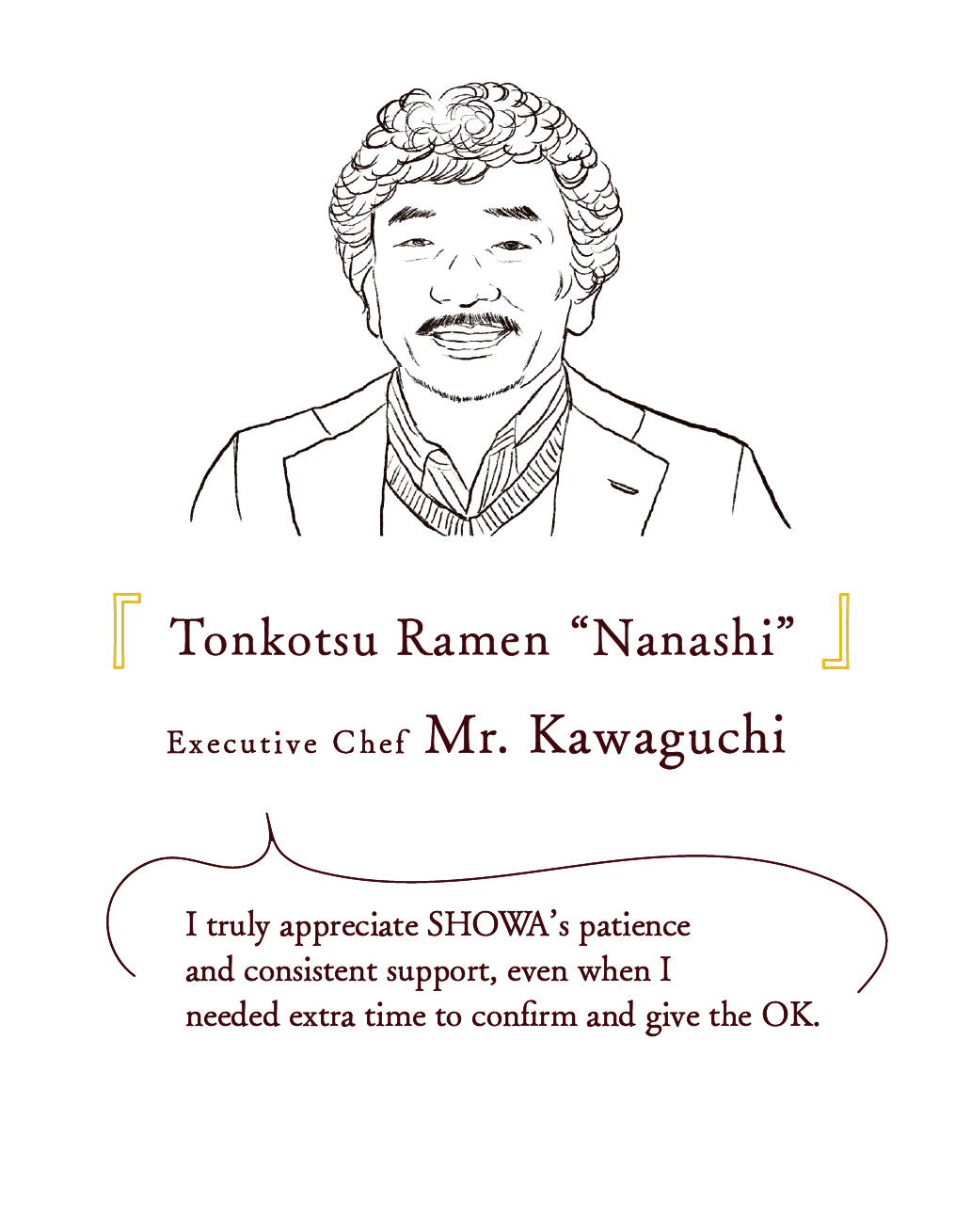
Could you tell us about your company’s business?
We started our business 16 years ago and now operate 10 locations of Tonkotsu Ramen Nanashi, mainly in Kanagawa and Tokyo. Originally, both the president and I worked at a Chinese restaurant chain, but honestly, the stores weren’t clean or presentable at all—kitchens, uniforms, everything. At the time, I wouldn’t have wanted to invite friends or family to the place I worked—it was just too embarrassing. So we decided to do the opposite: create clean, welcoming stores where we’d actually want to invite friends and family. That’s how we founded the company together. That approach hasn’t changed; I still oversee and manage the culinary operations, while the president handles overall management.
What led you to start using SHOWA’s gyoza?
About five years ago, we were looking for high-quality gyoza for our restaurants. As our business grew, we couldn’t keep up with making gyoza in-house, so we started searching for a reliable supplier. We consulted the wholesaler from whom we were buying Chinese ingredients, and they introduced us to four or five different companies. So, SHOWA was just one of several initial candidates at that time.
What was the deciding factor in choosing SHOWA?
The biggest factor was the sincerity we felt during the negotiations. When we were discussing creating our original gyoza, we initially ran into a problem where a little meat juice was leaking. SHOWA went out of their way to make a custom mold specifically for our gyoza. I’ve been in this industry a long time, and it’s rare to find a supplier willing to go that far. It must have cost them quite a bit, too. From our first discussions to the completion of the product and the start of our partnership, it probably took about a year. Even though I was hesitant to give the final approval, they patiently worked with us every step of the way. In the end, I think we were won over by their effort and enthusiasm. Once they made a custom mold for us, it wasn’t something we could just walk away from easily. Looking back, I guess you could say they’re really good at business too.
How have you found using SHOWA’s frozen gyoza?
The quality has clearly improved. Making gyoza by hand is actually quite difficult. Even if only skilled staff are making them, there’s always some variation. Especially when new employees or part-time staff are making gyoza, a certain percentage inevitably ends up unusable in the restaurant. We do eat them ourselves, but we can’t have gyoza every day, so they would just pile up in the freezer. SHOWA’s frozen gyoza solved this problem completely. Also, with frequent turnover among part-time staff, teaching them how to make gyoza took a lot of time and effort. It was especially difficult to train younger staff, like high school students. With 10 locations, we used to struggle with monthly losses and labor costs, but that worry is gone now. It’s also been a huge help in terms of cost.
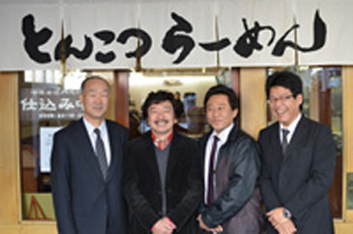
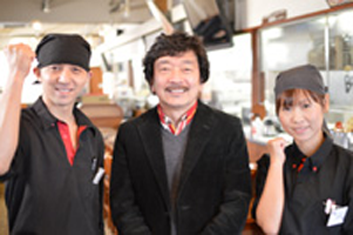
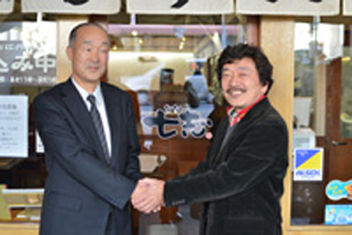

What led you to start using SHOWA’s gyoza?
Through our long-standing relationship, I’ve come to place complete trust in President Takahashi. I’ve actually known him for quite a long time—back when we were both salaried employees. At that time, I was working at a ramen chain, and President Takahashi worked for a wholesale food company supplying ramen shops. He came to my store as a sales representative trying to win new clients. Even though the foodservice industry has improved since then, back in those days it still had many old-fashioned practices, and people with a somewhat opportunistic approach weren’t uncommon. In that environment, President Takahashi stood out as extremely sincere and professional, always handling his responsibilities properly as a sales representative. Personally, we got along very well, and over the years, I developed complete trust in him. So even though I became independent before him, the moment I heard that President Takahashi was establishing his own food manufacturing and wholesale company, I immediately decided to source from SHOWA.
You were SHOWA’s very first OEM production.
It was based on their sincere and reliable response to our requests. At that time, SHOWA hadn’t even started making gyoza yet. Initially, we were sourcing miso and noodles from them. Then, President Takahashi mentioned that they were planning to start producing frozen gyoza for businesses, and we decided immediately to have them make our original gyoza. Since it was SHOWA’s first attempt at this, they had no prior track record, but we had no doubts. The trust we had built over the years—both professionally and personally—allowed us to entrust them with this project. Of course, it wasn’t just personal trust; it was also based on the confidence we had in their quality from our previous dealings and their consistent, sincere responses to our requests.
How has your experience been using SHOWA’s frozen gyoza?
I’m always impressed by their speed and sincerity. We’ve been using SHOWA’s gyoza for quite a long time, and while we’re, of course, satisfied with the quality and cost, what really stands out is their quick and honest response whenever there’s an issue or we want to adjust the flavor. I believe President Takahashi’s philosophy—that they want to be a gyoza manufacturer that serves both the restaurants and their customers—along with his sincere character, is clearly reflected in the attitude of his employees as well.
Could you tell us about your company’s future plans?
We want to continue creating restaurants where families can enjoy meals together easily and happily. Ramen isn’t a luxury—it’s an everyday meal that supports people’s daily lives. Of course, we aim to serve delicious ramen and gyoza, but above all, we want to build stores where families can have a fun and casual dining experience. From a business perspective, we also plan to actively expand the number of locations, mainly through franchise stores.
Please tell us about the business of HAPPY BAMBOO.
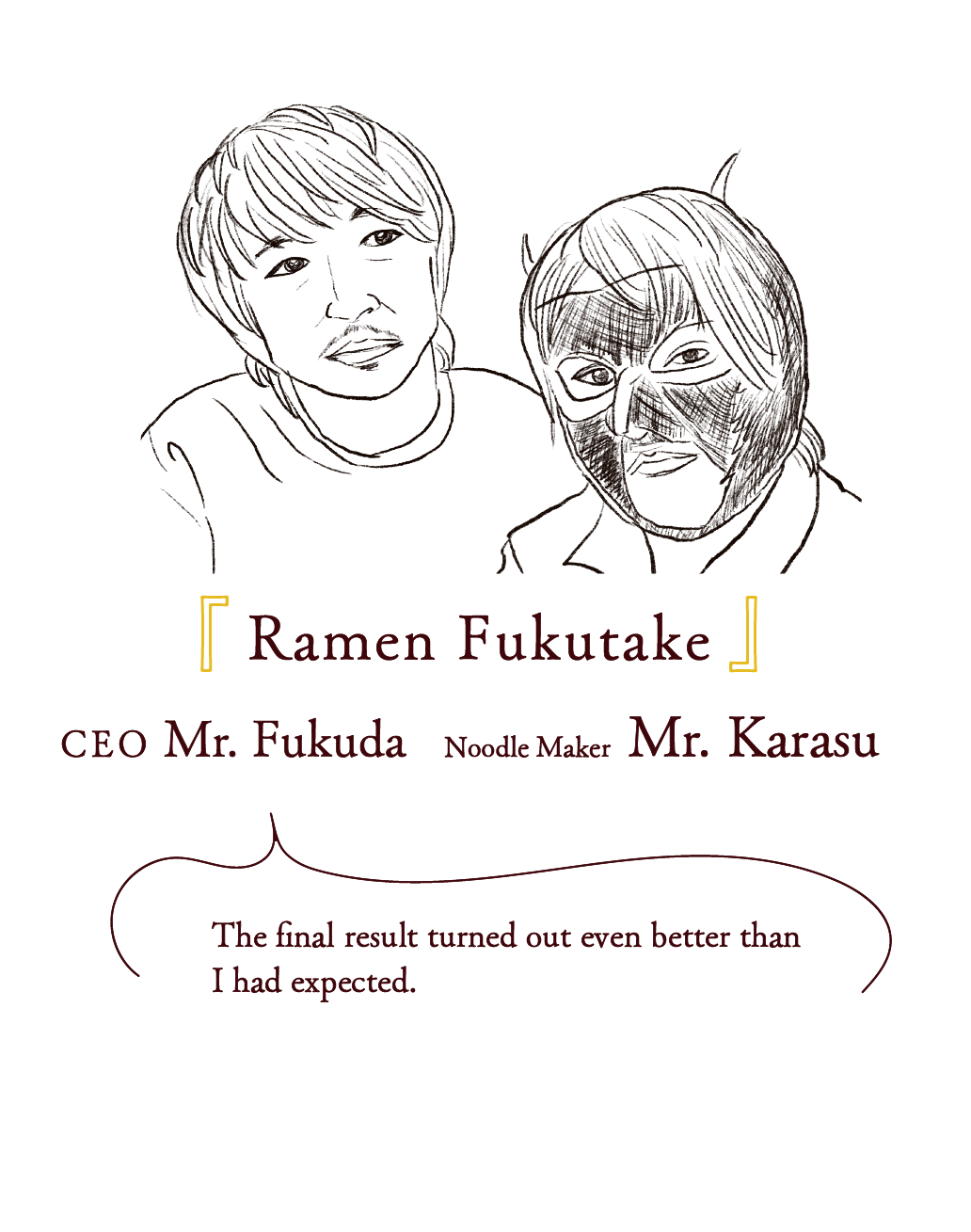
We opened our first location in 2002 and now operate six ramen shops. A major feature of our restaurants is that both the soup and noodles are made entirely from scratch to match each menu item. For example, with our soups, most shops start with a single base and create several variations from it. We, however, prepare each soup completely separately, and we use noodles specifically tailored to each soup. This allows us to pursue the most delicious flavors and combinations for every menu item, though it is very labor-intensive and not something commonly done at other shops.
What is your relationship with Mr. Karasu from Asakusa Kaikarō?
Mr. Karasu is not only a personal friend but also a collaborator and mentor-like partner in our culinary endeavors. We create collaborative menu items together and push each other to improve. In fact, the original gyoza we have SHOWA produce, called Kabukimono Gyoza, uses the “Kabukimono” flour that Mr. Karasu developed.
It’s extremely rare for flour to have its own brand name, isn’t it?
That’s right. I originally developed this flour for Rokurinsha, a restaurant famous for tsukemen, but we wanted more shops to use it. So, Nisshin Seifun officially launched it under the brand name Kabukimono. Its standout feature is that it creates a chewy, satisfying texture, and I’ve heard it’s now used by many noodle makers and ramen shops.
What led you to decide to use Mr. Karasu’s Kabukimono flour in your original gyoza?
To explain that, I need to talk about our relationship with SHOWA first. We’ve been working with SHOWA for over 10 years, ever since our first store. Back then, they supplied us not only with gyoza but also with ramen sauces and other ingredients. We started using those, and then we learned they were making gyoza as well, so we decided to try that too. Over time, as we became more focused on creating our own unique offerings, we decided to have SHOWA develop an original gyoza specifically for our shop.
Is that when you decided to use Mr. Karasu’s Kabukimono flour?
No, at first, we only developed the filling of the gyoza as an original. Around the same time, we also started using Mr. Karasu’s Kabukimono flour for our noodles. That gave us the idea: if we could bring the unique chewy texture of those noodles into the gyoza wrappers, we might create something really interesting. So we consulted both Mr. Karasu and SHOWA. The result exceeded our expectations. Of course, it didn’t work perfectly from the start—they went through many rounds of trial and error to get it right.
What are the key features of Kabukimono Gyoza?
It gets a bit technical, but basically, flour is classified by its protein content into bread flour, semi-strong flour, and medium-strength flour. In noodle development, I select and blend several types to create the desired flavor and texture. That blend is the key to development. By chance—or perhaps fortunately—the protein content of Kabukimono flour is very close to that of typical flour used for gyoza wrappers. When I heard it might be used for gyoza skins, I saw real potential. That said, Kabukimono is honestly a very luxurious choice for gyoza wrappers. It has a strong chewy texture, distinctive flavor, and unique color. While ramen shops usually serve pan-fried gyoza, with Kabukimono Gyoza, serving them boiled is also a great option to really highlight that chewy texture. Even in ramen shops or other types of restaurants, like izakayas, there are many places without a gyoza grill. That’s where serving them as boiled gyoza could be ideal. Of course, they taste fantastic pan-fried as well.
Did you have any hesitation about sourcing gyoza commercially instead of making them in-house?
Not at all. We felt strongly that gyoza should be left to the professionals so we could focus on the ramen. And, I’d say this is similar to our relationship with Mr. Karasu—when it comes to noodles, it’s better to collaborate with experts who have dedicated their careers to that craft. Many shops pride themselves on making noodles in-house, and I understand that freshly made gyoza used immediately can be delicious. But in many ways, there are limits, and insisting on doing everything in-house can actually lead to inconsistencies in quality. That’s why we decided to entrust our gyoza to SHOWA, with whom we already had a strong, trusted relationship.
What are the future plans for Kabukimono Gyoza, developed together by Mr. Fukutake, Mr. Karasu, and SHOWA?
Even if a product is delicious during development, it won’t taste good to customers unless the final preparation in the restaurant is done properly.
For Kabukimono Gyoza, to bring out the chewy texture of the wrapper, you need to use more water than when cooking regular gyoza—almost like boiling. If this point is followed, the wrapper becomes plump and very tasty.
I know some ramen shops or izakayas use cheaper, lower-grade commercial gyoza to save costs, but that’s exactly where I’d like to see this carefully crafted Kabukimono Gyoza used as a selling point.
Kabukimono is a very high-grade flour, and normally, no one would think to use it for gyoza wrappers. In that sense, I really admire Mr. Fukutake’s initiative in suggesting we make gyoza with Kabukimono, and I think SHOWA did an excellent job bringing that idea to life, expanding the possibilities of the flour.
As for the product itself, I believe it’s something that can be used with confidence. Since we’ve managed to create something this good, I’d be thrilled to see the Kabukimono Gyoza name spread widely alongside the Kabukimono flour brand.